Stone veneer · Albany & Capital Region
Manufactured and natural stone veneer repair and installation
Popping stones, white mineral streaks and damp interior baseboards usually point to water trapped behind adhered stone veneer. We correct the drainage and flashing details, then reset or install stone so the wall drains clean.
Call or text (518) 888-7938
Book spring work now. Winter assessments and estimates available.
Updated November 2026
Short answer
Loose or leaking stone veneer almost always goes back to missing flashing, mortar bridged down to a sidewalk or patio, or only a single layer of building paper over wood sheathing. We strip back affected sections, inspect the sheathing, install two-layer weather barriers, drainage mat and weep screeds, and set manufactured or thin natural stone. Mortar work needs 40 °F and rising.
Key facts
- Service area
- Albany, Colonie, Latham, Delmar, Guilderland, Niskayuna, Schenectady, Troy, Clifton Park and Saratoga Springs.
- Season
- EIFS and stucco finishes need about 40 °F and rising, with no freezing for 24 hours. In the Capital Region that means spring through late fall.
- Who does the work
- Our own crews, from The Dom Construction Group LLC.
- Insurance
- General liability, umbrella and workers' compensation insurance; certificates on request.
- Estimates
- Free. Start with 3–5 photos by text, or use the form.
- Reply
- We reply within one business day, Monday to Friday.
Where adhered stone veneer goes wrong
Adhered manufactured stone and thin-cut natural stone look heavy and permanent, yet the mortar bed behind them is porous. Rain driven by wind passes through hairlines in the mortar joints and collects on the back side of the scratch coat. When the original installation skipped drainage details, that water has nowhere to go except into the framing. Across Albany, Colonie, Clifton Park and Saratoga Springs, we repeatedly uncover the same installation shortcuts:
- stone and mortar carried tight down to concrete steps, patios, asphalt driveways or mulch beds with no bottom weep screed and no clearance gap
- a single torn layer of building paper stapled over OSB sheathing instead of two independent weather-resistive barrier layers or a rainscreen drainage mat
- missing kick-out flashing where roof eaves terminate into a stone gable or garage cheek wall
- flat stone wainscot caps or stone window sills set dead level without slope, overhang kerfs or through-wall pan flashing
- corroded staples or improperly fastened metal lath pulling away from studs rather than anchored cleanly into framing
- rigid mortar packed tight against vinyl or aluminum window frames where a backer rod and flexible sealant joint belong
How we open, drain and rebuild a veneer wall
When only two or three stones have popped off a dry porch column because of frost at a hose bib or minor settlement, we clean the old mortar bed, check surrounding units with a light tap hammer, and reset matching stones. When tapping reveals a wider hollow drum sound, dark staining at the base of the wall, or musty odors indoors, surface re-sticking will not hold.
On moisture repairs, we strip the stone, mortar bed and lath back to clean framing around the leak path. You get clear photos of the exposed sheathing before we close anything up. Once any damaged substrate is addressed, we detail the wall to drain: step and kick-out flashings integrated shingle-fashion into two layers of weather-resistive barrier, corrosion-resistant weep screeds held clear above grade and hardscapes, an entangled-mesh drainage mat where continuous drainage is warranted, galvanized metal lath fastened into framing, a scratched base coat, and full buttered mortar coverage on the back of every stone.
New thin stone and manufactured stone installations
We also install new manufactured stone and sawn thin natural stone veneer on additions, porch piers, fireplace chases, storefronts and facade upgrades across the Capital Region. Proper stone work depends as much on layout as on waterproofing: blending stones from multiple crates so color stays natural, weaving corner returns instead of mitering flat pieces, keeping horizontal joints broken rather than running long vertical seams, and tooling mortar joints only after they reach thumbprint hardness so mortar never smears across the stone face. Where stone meets stucco, EIFS or brick masonry, we install clean separation beads and perimeter sealants.
Typical scope and cost ranges for veneer work
Resetting a handful of loose stones, cutting in base clearance above a heaving patio, or installing a missing kick-out flashing is often a few hundred to a couple of thousand dollars. Tearing off wet stone elevations, rebuilding flashing transitions and laying new veneer over a rainscreen assembly costs more based on square footage, stone selection and whether upper gables require our pipe scaffold. Mortar and stone setting require temperatures around 40 °F and rising with no freeze for 24 hours, though we inspect walls and write free estimates year-round.
Why roof-to-wall junctions soak stone veneer
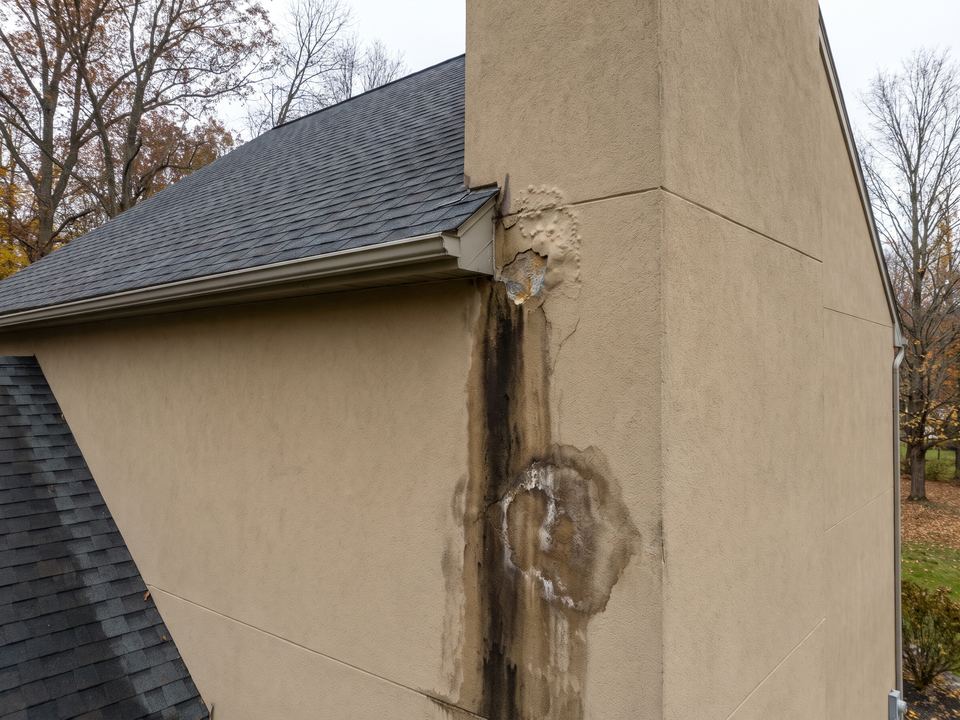
AI-generated illustration
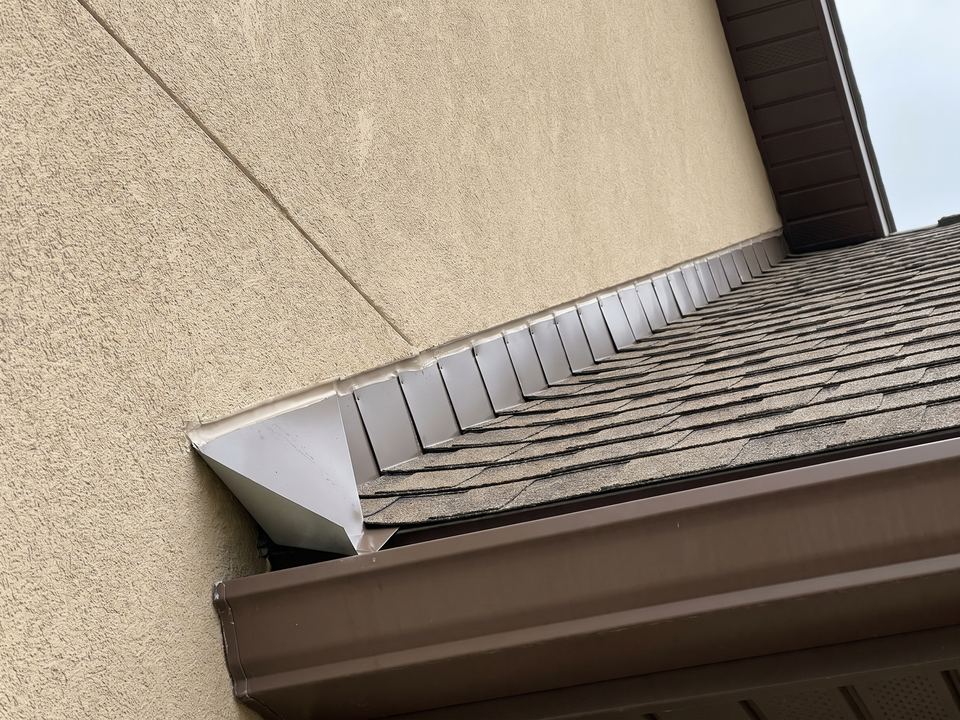
AI-generated illustration
Stone veneer repair and installation questions
Why are stones dropping off my porch column or garage front one by one?
Adhered stone units usually let go when water gets behind the scratch coat and freezes, breaking the bond between the mortar bed, metal lath and stone backs. Common entry points include unsealed gaps around light fixtures or railings, flat column caps without overhanging drip edges, missing roof kick-out flashings above, or stone carried tight against a concrete porch slab where snowmelt wicks upward.
How much clearance should stone veneer have above soil, mulch or a patio?
Adhered stone veneer over wood-framed walls needs a corrosion-resistant weep screed at the base so any water draining down the weather barrier can exit freely. Industry standards generally hold stone termination about four inches above soil or mulch and at least two inches above paved walks, steps or patios. Bridging mortar tight to pavement blocks drainage and transfers frost heave straight into the veneer.
What is the difference between manufactured stone and thin natural stone veneer?
Manufactured stone—often called cultured stone—is molded from lightweight concrete aggregates and iron-oxide pigments, making it lighter to handle and uniform in thickness. Thin natural stone veneer is quarried real stone sawn to roughly an inch of thickness so it can be adhered without a structural brick ledge. Natural stone resists surface color fading indefinitely and tolerates road-salt splash better near steps and walks.
Can fallen stones simply be glued back onto the existing mortar bed with construction adhesive?
Gluing loose stones back over dusty, damp mortar with tube adhesive is a temporary patch that traps water behind the stone and usually fails after another winter. If the underlying scratch coat, lath and sheathing are dry and sound, fallen units should have old mortar cleaned off and be reset in polymer-modified masonry mortar. If the backing sounds hollow or soft, the wet section must be opened first.
Why does a drainage mat matter behind new stone veneer in Upstate New York?
Mortar and stone absorb wind-driven rain and hold dampness against the back of the lath. Over wood sheathing, a single layer of building paper wrinkles or bonds to wet scratch mortar, allowing moisture to soak into OSB or plywood. Two layers of weather-resistive barrier paired with a thin entangled-mesh drainage mat create an open air gap so water drains out the bottom weep screed and framing dries quickly.
Photos of your stone veneer for a free estimate
Send a close-up of loose stones or base clearance and a wide view of the wall.
Related stone and wall work
- Brick and stone repointing
Raking and repointing open mortar joints between full-bed stone and brick.
- Flashing and waterproofing
Through-wall flashings, window perimeter sealants and air-water barriers.
- Exterior wall inspections
Paid investigative probing when water is getting behind stone, stucco or EIFS.
Stones coming loose on a porch or facade? Text us.
Book spring work now. Winter assessments and estimates available.