Envelope waterproofing · Capital Region
Exterior waterproofing, sealants and breathable coatings in the Capital Region
Brick, stone veneer, stucco, and EIFS stay sound only when joints shed bulk rain and let trapped vapor escape. We cut out failed caulking, install metal drip caps and kick-outs, apply air and water barriers behind cladding, and treat masonry with breathable repellents that will not trap winter moisture.
Call or text (518) 888-7938
Book spring work now. Winter assessments and estimates available.
Updated November 2026
AI-generated illustration
Short answer
We stop above-grade wall leaks across the Capital Region using properly tooled sealant joints over backer rod, metal drip-cap and kick-out flashing, air and water barriers behind new cladding, and breathable water repellents or coatings matched to brick, stone, stucco, or EIFS. Coatings and sealants follow manufacturer temperature limits, typically around 40 °F and rising. Text photos to (518) 888-7938.
Key facts
- Service area
- Albany, Colonie, Latham, Delmar, Guilderland, Niskayuna, Schenectady, Troy, Clifton Park and Saratoga Springs.
- Season
- EIFS and stucco finishes need about 40 °F and rising, with no freezing for 24 hours. In the Capital Region that means spring through late fall.
- Who does the work
- Our own crews, from The Dom Construction Group LLC.
- Insurance
- General liability, umbrella and workers' compensation insurance; certificates on request.
- Estimates
- Free. Start with 3–5 photos by text, or use the form.
- Reply
- We reply within one business day, Monday to Friday.
Why Film-Forming Sealers Ruin Older Brick and Brownstone
When brick rowhouses in Albany and Troy or stone fronts in Schenectady and Saratoga Springs show damp interior plaster or white efflorescence, well-meaning owners sometimes roll a glossy clear sealer across the masonry. Non-breathable film-forming sealers lock liquid water and vapor right behind the face of the brick; the next hard Capital Region freeze expands that trapped moisture and pops the faces off the masonry units. Before applying any water repellent, open mortar joints need proper brick or stone repointing and damaged units need masonry restoration, because no clear treatment bridges open cracks or missing mortar. Once joints are sound and washed clean, we apply penetrating, vapor-permeable water repellents or breathable mineral coatings that shed wind-driven rain while letting interior vapor escape.
Perimeter Sealant Joints, Backer Rod, and Three-Sided Adhesion
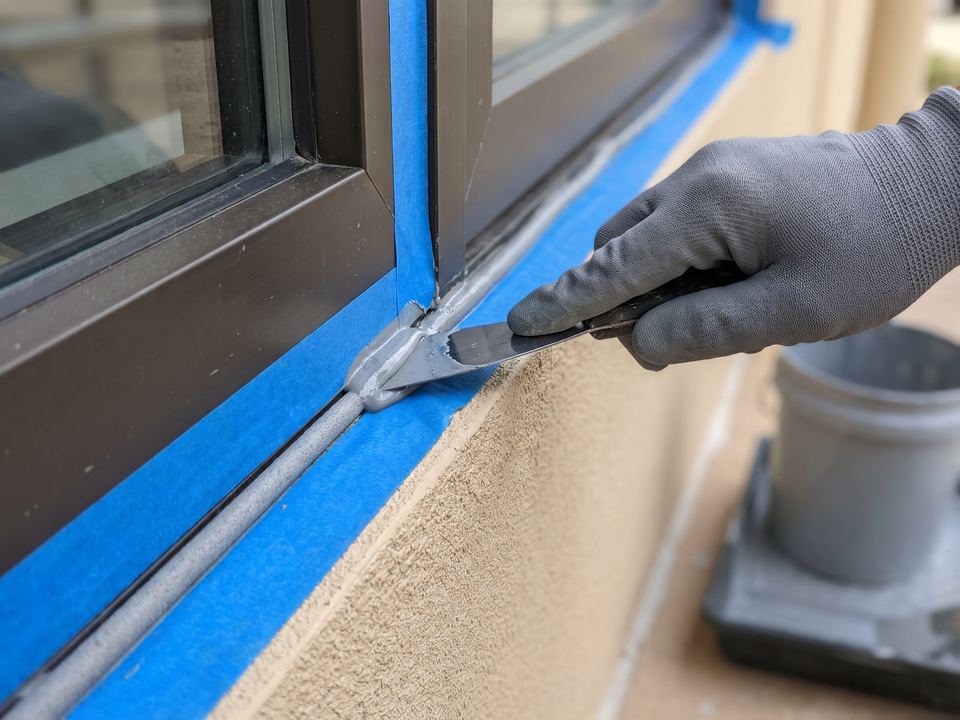
Caulking smeared over the top of old, hardened silicone or split latex sealant splits again during the first cold snap. Durable commercial and residential joint work comes down to joint geometry. Our crews cut out failed sealant cleanly, grind or solvent-wipe masonry and metal substrates to bare bond surfaces, and press closed-cell or soft-rod backer rod to the right depth so the new polyurethane, hybrid, or low-modulus silicone sealant forms an hourglass profile. Backer rod prevents three-sided adhesion—allowing the sealant bead to stretch between the window frame and the brick, stone veneer, stucco, or EIFS jamb without tearing away from the edges.
Metal Drip Caps, Kick-Outs, and Drainage Planes Behind Cladding
Sealant alone cannot replace missing sheet-metal gravity laps. Where horizontal stone wainscots, limestone belt courses, window heads, or foam bands project from a facade in Colonie, Latham, Delmar, Niskayuna, or Clifton Park, standing water on flat tops will find its way behind the wall unless a sloped metal drip cap with hemmed edges projects past the face and kicks water clear. At roof-to-wall intersections and chimney rooflines, we install step flashing, counterflashing cut into mortar reglets, and kick-out diverters. Whenever a section of stone veneer, stucco, or EIFS comes off for repair, we also detail the concealed air and water barrier—lapping sheet membranes or fluid-applied barriers shingle-style into flashings and weep screeds so incidental moisture drains out harmlessly.
Matching Coatings and Repellents to Each Wall Assembly
Different exterior surfaces demand different weather protection: textured EIFS and modern cement stucco often benefit from crack-bridging elastomeric acrylic coatings once substrates are dry and flashed, whereas historic brick, natural stone, and lime plaster require high-permeability breathable treatments. Remember that our scope covers above-grade building envelopes—not interior basement drainage or structural foundation engineering. Most sealants, fluid barriers, and coatings require dry substrates and temperatures around 40 °F and rising without freezing for 24 hours, though we inspect leaks and quote work all year. Resealing a handful of windows or installing drip caps is often a few hundred to a couple of thousand dollars, while whole-building recaulking or coating scales with linear footage and lift or scaffold access. Text 3–5 photos to (518) 888-7938 to start.
How we replace failed exterior sealant joints
Cut out old caulk completely
We slice out brittle, split caulk down to clean jamb edges rather than smearing fresh sealant over failed material.
Clean and prep both bond faces
Masonry, stone, stucco, EIFS, and metal window frames are ground, brushed, or solvent-wiped so dust and old residue cannot break adhesion.
Set properly sized backer rod
Closed-cell or soft-rod foam is rolled to uniform depth to control bead thickness and prevent three-sided adhesion.
Gun and tool movement-rated sealant
Commercial-grade polyurethane, hybrid, or low-modulus silicone is gunned void-free and tooled concave to shed rain cleanly.

Wall waterproofing, flashing and coating questions
Will a clear masonry water repellent stop leaks through cracked mortar joints?
No. Penetrating siloxane or silane-type water repellents line microscopic pores inside sound brick, stone, and mortar so wind-driven rain beads off, yet they cannot span open gaps, missing mortar, or structural cracks. Open joints and loose units must be raked out and repointed before any breathable repellent goes on the wall.
Why should old caulk be cut out instead of applying fresh sealant over the top?
Skimming a thin ribbon of new caulk over oxidized, split sealant leaves no depth for movement and bonds poorly to dirty edges. Cutting out the failed joint, cleaning both jamb surfaces, and setting foam backer rod lets the new sealant flex freely across seasonal expansion without pulling loose from the brick or window frame.
Do you handle interior basement waterproofing or sump pump systems?
No, our waterproofing trade covers above-grade exterior building envelopes—perimeter window and control-joint sealants, sheet-metal drip caps and kick-out flashing, concealed air and water barriers behind stone veneer, stucco, and EIFS, foundation parging above grade, and breathable masonry coatings. Interior French drains, sump pumps, and below-grade excavation belong to basement waterproofing specialists.
When should an exterior wall get an elastomeric coating versus a breathable mineral paint?
Elastomeric acrylic coatings stretch across hairline crazing and suit modern EIFS and properly flashed Portland-cement stucco over drained assemblies. Older solid brick walls, brownstone details, and historic lime plaster need vapor-permeable silicate, mineral, or penetrating treatments instead, because thick elastomeric films can blister if interior moisture vapor pushes outward.
Should we seal the bottom gap under a stone veneer wall or window sill?
Not every horizontal joint is meant to be caulked shut. Weep screeds at the base of stone veneer and stucco, open head-joint weeps above steel brick lintels, and the underside of metal drip flashings are intentional drainage exits; caulking them closed traps water inside the wall cavity and causes interior leaks.
Send photos of leaking joints or stained masonry
Text 3–5 photos of window perimeters, stone bands, or stained brick to (518) 888-7938 for a free estimate.
Masonry and cladding repairs that pair with waterproofing
- Masonry repointing
Open mortar joints raked out and repointed before breathable repellents go on.
- Chimney crowns and flashing
Cracked crowns, reglet counterflashing, and roofline water entry repairs.
- Stone veneer
Weep screeds, drainage planes, and sill drip flashings for stone walls.
- Masonry restoration
Spalled brick replacement, efflorescence cleaning, and brownstone repair.
Tracking water stains around windows, bands, or chimneys?
Book spring work now. Winter assessments and estimates available.