ALBANY MASONSTONE VENEER · MASONRY RESTORATION (home) Call or text (518) 888-7938 Free estimate

Stucco & plaster · Capital Region

Cement stucco, lime plaster and parging in the Capital Region

Knock on the wall first: if it sounds solid like masonry rather than hollow like foam, you have traditional stucco or plaster. Our masons repair cracked three-coat cement stucco, patch older softer lime plaster over brick, refinish faded walls, and parge exposed foundations.

Call or text (518) 888-7938

Book spring work now. Winter assessments and estimates available.

Updated November 2026

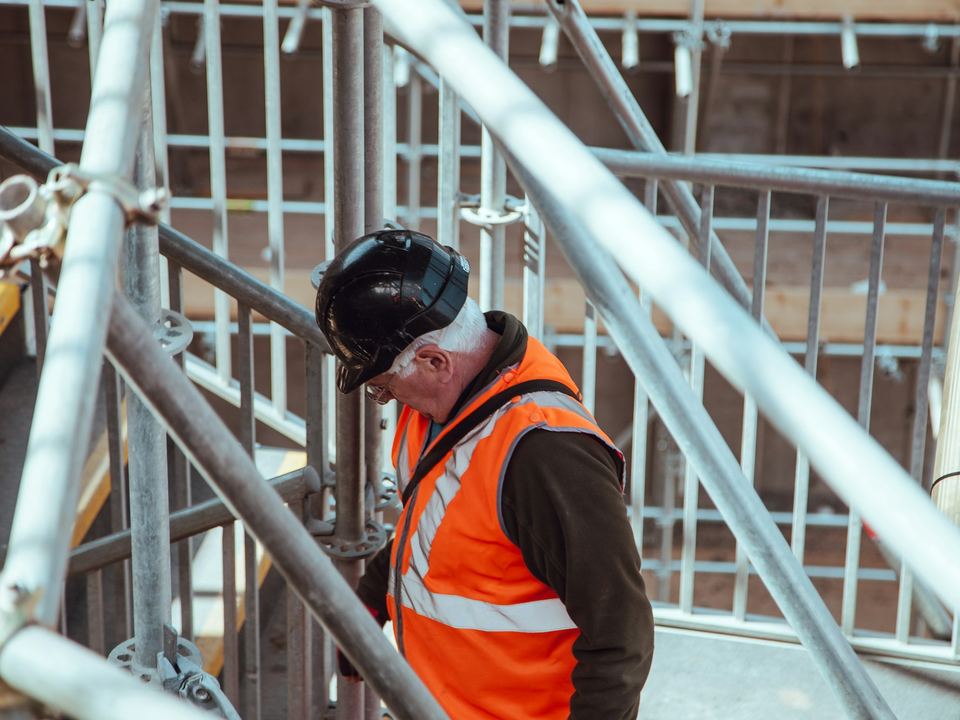
Worker in a hard hat under a scaffold
Photo: Stock photo

Short answer

We repair and refinish hard-coat cement stucco, older lime-based exterior plaster, and foundation parging across the Capital Region, and we install new three-coat stucco over metal lath. Matching mortar hardness and vapor permeability matters on older masonry walls so trapped moisture does not spall the substrate. Curing and finish coats require about 40 °F and rising. Text photos to (518) 888-7938.

Key facts

Service area
Albany, Colonie, Latham, Delmar, Guilderland, Niskayuna, Schenectady, Troy, Clifton Park and Saratoga Springs.
Season
EIFS and stucco finishes need about 40 °F and rising, with no freezing for 24 hours. In the Capital Region that means spring through late fall.
Who does the work
Our own crews, from The Dom Construction Group LLC.
Insurance
General liability, umbrella and workers' compensation insurance; certificates on request.
Estimates
Free. Start with 3–5 photos by text, or use the form.
Reply
We reply within one business day, Monday to Friday.

Telling Cement Stucco, Older Lime Plaster, and EIFS Apart

Homeowners and property managers often call every textured exterior wall stucco, yet the repair materials are completely different depending on what sits beneath the finish. Tap the wall with your knuckles: synthetic EIFS sounds hollow and yields slightly over foam board, whereas traditional stucco feels hard and rings solid like masonry. Across older neighborhoods in Delmar, Niskayuna, Schenectady, Troy, Saratoga Springs, and residential streets in Albany, we see two distinct solid-plaster assemblies: Portland-cement three-coat stucco applied over galvanized metal lath on wood framing, and older, softer lime-rich exterior plaster troweled directly onto historic brick or stone. Putting a dense, rigid cement patch onto soft historic lime plaster or soft brick traps moisture and shears right off after a winter or two, so matching the mix to the original wall comes first.

Sounding Hollow Delaminations and Rebuilding Lath Details

Hairline map crazing on cement stucco is often cosmetic, while stair-step cracks, rusted corner beads, and bulges that clack hollow when tapped mean the scratch coat has separated from the lath or masonry base. Our crews tap out the elevation to find every unbonded pocket before cutting clean saw lines around the failed zone. On wood-framed walls, we inspect the building paper or weather barrier, replace corroded metal lath and casing beads, install missing weep screeds at the base of the wall, and build the patch back in proper lifts—scratch coat, brown coat, and finish coat—giving each coat time to hydrate and cure so shrinkage cracks do not telegraph back through.

Foundation Parging and Stucco Over Older Brick

Exposed concrete block, rubble stone, and older brick foundations take heavy punishment from splashback, de-icing salts, and snowbanks along driveways and porches. When old parging flakes loose or crumbles at grade, slapping a skim coat over dusty, salt-contaminated masonry will fail by spring. Alongside our brick repointing and masonry restoration work, we chip away hollow parge coats, clean the substrate, repoint open mortar joints first, dampen the masonry for proper suction control, and apply a bonded parge coat terminated cleanly above hardscape surfaces so frost heave cannot pry the bottom edge loose.

Blending Textures, Breathable Finishes, and Repair Budgets

Matching roughcast, sand-float, skip-trowel, or dash stucco textures takes practiced trowel work—our field team brings about 19 years of experience in stucco, plaster, masonry, and coatings. Because fresh gray mortar cures to a different shade than twenty-year-old weathered stucco, we can either feather localized patches or apply a vapor-permeable mineral or elastomeric coating from corner to corner so repairs disappear and hairline cracks bridge cleanly; see our waterproofing and breathable coatings page for coating options. Mortar curing and finish coats require temperatures around 40 °F and rising with no freezing for 24 hours. Localized crack, corner, and parging repairs often fall between a few hundred and a couple of thousand dollars, while multi-story lath rebuilds or full refinishing depend on square footage and scaffold access. Text 3–5 wall photos to (518) 888-7938 for a free estimate.
Cracks, delaminations, and moisture clues on stucco walls

Hollow-sounding bulges on hard walls

Sections of solid stucco that clack like a loose tile when tapped with knuckles.

Usually means
Scratch or brown coats losing mechanical key with rusted metal lath or dusty masonry behind them.
What we do
Saw-cut back to tightly bonded stucco, replace corroded lath and paper, and rebuild in three cured coats.

Stair-step or diagonal corner cracks

Cracks radiating from window corners, lintels, or foundation transitions.

Usually means
Building movement, rusted steel lintels, or missing control joints and casing beads.
What we do
Address corroded steel or missing beads, rout and rebuild the cracked stucco zone, and coat if needed.

Crumbling foundation parging at grade

Sheets of mortar flaking off block, stone, or brick foundations along driveways and steps.

Usually means
Splashback, de-icing salts, rising damp, and parging carried tight against frost-heaving concrete walks.
What we do
Chip away loose parge coats, repoint open masonry joints, and apply bonded parging with a clean bottom gap.

Blistering paint over historic plaster

Peeling skins and powdery mortar on older plastered brick walls in city neighborhoods.

Usually means
Non-breathable latex paint or dense cement patches trapping vapor inside soft lime plaster and brick.
What we do
Strip trapped coatings, patch with compatible lime-rich mortar, and finish with a vapor-permeable mineral coat.
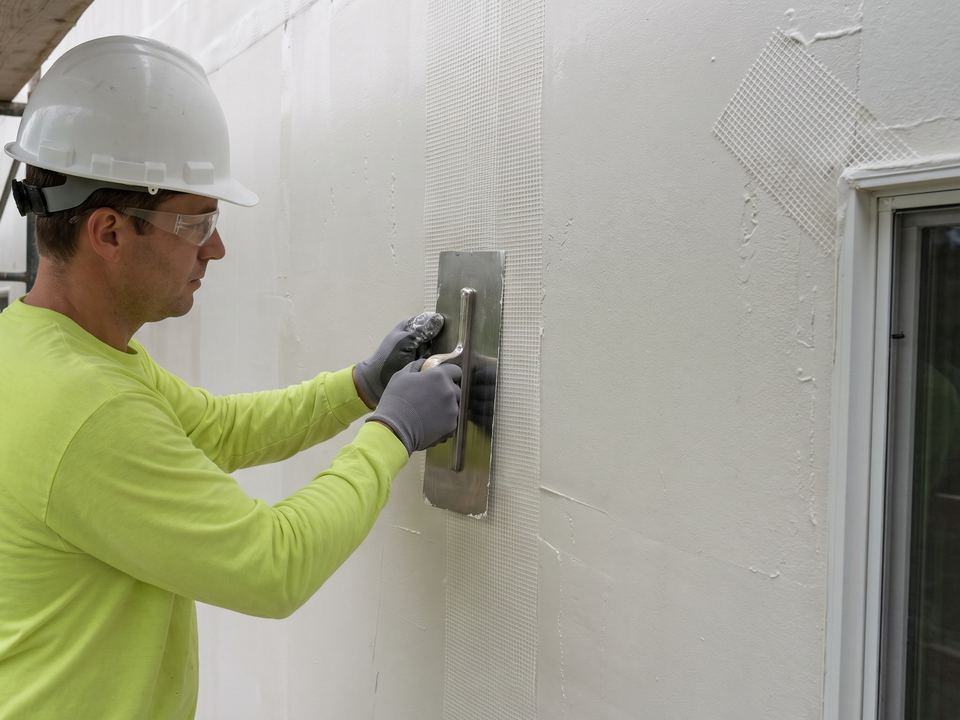
AI-generated illustration: reinforcing mesh troweled into wet base coat, with a diagonal mesh patch at a window corner

AI-generated illustration

AI-generated illustration

Cement stucco and exterior plaster questions

How can I tell whether my house has hard-coat cement stucco or synthetic EIFS?

Knock firmly on an undamaged spot away from studs or corners. Traditional three-coat cement stucco and lime plaster feel hard, cold, and solid like masonry, about three-quarters of an inch thick. Synthetic EIFS sounds drum-like and hollow because only a thin mesh-reinforced skin covers foam insulation board. Checking a chipped edge at the foundation or hose bib also reveals either gray mortar over metal lath or white foam.

Why does older exterior plaster over brick need a softer lime-rich mix?

Nineteenth- and early twentieth-century brick walls in Albany, Troy, and Schenectady were laid and plastered with softer, breathable lime mortars. Patching those walls with modern high-strength Portland cement creates a rigid, low-permeability shell that traps moisture inside the softer brick, leading to winter freeze-thaw spalling and sheets of plaster popping off.

What causes foundation parging to blister and crumble near walkways?

Foundation parging fails most often when moisture rises from damp soil or enters from unsealed sill plates above, combined with sidewalk de-icing salts and frost heave where mortar was carried tight against concrete pavement. Removing loose coats, repointing open block or brick joints, and leaving a clean relief gap above walkways prevents prying.

Will a patched section of cement stucco match the rest of my wall?

Our masons sponge-float, dash, or trowel the finish coat to match the grain and relief of surrounding stucco closely. Even with matched sand and texture, new unpainted cement cures slightly lighter or darker than weathered stucco, so fog-coating or applying a breathable mineral or elastomeric finish across the elevation achieves uniform color.

Why is a weep screed required at the bottom of stucco over wood framing?

Stucco over wood-framed sheathing acts as a reservoir cladding: wind-driven rain that penetrates hairline cracks reaches the weather-resistive barrier behind the metal lath and drains downward by gravity. Without a perforated metal weep screed above grade, that water collects along the sill plate and rots rim joists from the outside in.

Photos of your stucco wall or foundation for a free estimate

Text a close-up of the cracking or spalling plus a whole-wall shot to (518) 888-7938.

Rather text? Text photos to (518) 888-7938

What are you seeing? (optional)
Add details (optional)
Property (optional)
How soon? (optional)
Best way to reply (optional)
Photos (optional, up to 5)

Add 3–5 photos: one close-up and one of the whole wall. We shrink them before sending.

    required. We reply within one business day, Monday to Friday. We use your details only to reply to this request. Privacy

    Rather text?

    (518) 888-7938

    Call or text Monday–Friday, 7 AM–5 PM.

    Related masonry and plastering work

    Have loose stucco, flaking parging, or cracked plaster?

    Book spring work now. Winter assessments and estimates available.